Chapter-17
Tour of Europe
Myself accompanied by wife went on a 10 days tour of Europe during July 2009. The trip was organized by the Cox & King. We were eager to wander through charming streets, marvel at splendid landmarks and savour the bliss of Europe’s picturesque landscape.
London- The capital of England & the United Kingdom is a 21st century city with history stretching back to Roman times. The city lies on both sides of the river Thames some 80 km upstream from its estuary on the North Sea. The journey started from the ‘Thistle hotels’ near Heathrow airport- our temporary home for 2 days .The first day was optional. We proceeded to the nearest tube station of Heathrow terminal -5 and purchased Travel cards (@ 7 pounds ) for unlimited travel over all zones for the day except in the morning peak hour. On entering the station we found a Piccadilly line train waiting for us. In the train regular announcements were made on the following lines” This is Knights bridge. This is Piccadilly line service to Cockfosters. Please mind the gap between the train and the platform.” Our first destination was ‘London Tower’ which is a concentric tower built in 11th century and in the intervening millennium it has served varied purposes such as parish, palace, prison, mint and arsenal. its blood soaked 900 years of history inspires amazement. The major attractions are timeless, priceless and romantic vestiges of the Royalty viz. The Imperial State Crown, sceptres, annulets and jewelled sword. There were ‘Beefeaters’, the warders clad in period uniform offering guided tours. ‘Ravens (pigeons 6 in number) were also conspicuous by their presence. Legend has it that should they leave the Tower would fall. Nobody believes it but just to be on safe side their wings are clipped. If one dies there is immediate replacement. It is said’ Happiness is leaving the tower but the satisfaction is having been there’. We availed of the Thames cruise. Passing under the bridges of the river and glancing at the historic buildings on the two sides between the Tower bridge and the Westminster bridge was fascinating. On the Westminster bridge one fellow was playing Scottish bagpipe. On handing over 1pound to him he obliged us by playing some tunes and posing for a photograph with us. Another fellow was selling fried chestnut saying ‘garam’, ’garam’. When asked wherefrom did he learn these words, he replied that it was from an Indian from whom he purchased raw chestnut. 221B, Baker street ,which was once the residence of the legendary detective Sherlock Holmes now houses the ‘Sherlock Holmes museum’. The Oxford street (2 kms long) is the largest shopping centre of the world. The famed departmental store ‘Selfridges’ was celebrating its centenary year with attractive illumination of its building. At one crossroad I found a hawker distributing newspapers to the pedestrians free of cost. When asked the reasons for it he implored me to take one on payment. The return Journey for the hotel was from Baker Street underground station through Bakerloo line. It being the evening peak the train was full. But on noticing us standing two young ladies stood from their seats and offered the same to us in consideration of our senior citizen status. We were overwhelmed. At Heathrow terminal-5 station I was guided to the bus terminal-7 where the timing of the next bus (no 423) for our destination appeared as 21.45 hrs. It was not possible for me to locate the hotel during night hours. I requested a lady passenger for help. She assured me and reminded me when the bus was approaching Thistle hotel .
The next day we were taken to Buckingham Palace (the Monarch official London residence). The adjacent Victoria Memorial reminded me of another building by the same name at Kolkata. The coach passed through the Parliament house area. The guide showed us the Parliament Square at one end of the Parliament containing about a dozen statues of statesmen (including prominently displayed statue of Winston Churchill) and other notable individuals. St Paul Cathedral is located at the highest point of the city. The elegant classic structure is crowned by a spectacular dome. There are a number of memorials in it but the most evocative is the simple inscription on the tomb of its designer (Christopher Wren) “if you seek a monument ,look around you”. While leaving the city the guide surprised us that there are still a number of foxes in the city and they enjoy the protection of law.


Brussels- It is the administrative, commercial and financial hub of Belgium. For crossing the English Channel. our motor coach took us to Dover railway station (England side) where it loaded itself onto a freight train composed of covered wagons, provided with glass panes on the two sides and toilets at the two ends of the train. After the train was full it set off for Calais through the Channel tunnel. While on run one had the option of either remaining seated in the coach or to get down and occupy the aisle between the coach and the wagon walls. The tunnel was lighted. At Calais station (France side) the coach detached itself from the train and proceeded to Brussels. The tour manager suggested that everyday we move to one row in rear so that everybody gets a chance to occupy the front rows but it went unheeded. It was an introductory tour of the city through the picturesque medieval streets & the magnificent cathedrals. The ornate ‘Grand Place’ is a cobbled rectangular market square lined on each side with opulent gilded buildings and edifices. It is an important tourist destination and known all over the world for its decorative and aesthetic wealth. The historic plaza frequently hosts festive and cultural events. While admiring the sublime Gothic buildings the eyes got fixed on stalls showcasing fascinating array of blooming flowers in all brilliant colours. The nearby shops sold famous Belgian waffle ( an item of bakery featuring unique grid pattern that enables formation of deep pockets for filling with better, syrup and cream), delectable chocolate and near-naturalistic lace . The dinner (Indian menu) was arranged at “Au Palais des Indes’. The night stay was at the hotel ‘Mercure-Brussels Airport’.
Paris—It is France’s capital and a global centre for art, fashion gastronomy and culture. The cityscape is crisscrossed by wide boulevards and the river Seine. On arriving Paris from Brussels the guide joined us at a designated place. She described the important landmarks of the city in a lucid language. ’Champ Elysees’ is a fashionable street of Paris connecting ‘Arc de Triomphe’ and ‘Place de la Concorde’. The broad avenue is characterized by tall trees , upscale shops and open air restaurants. The tour manager informed us that the Indian army had joined the French soldiers on the Champ Elysees during the annual Bastille Day parade on 14th July this year. It was on this date of the year 1789 that the Bastille fortress was stormed by the revolutionaries which kicked off the French Revolution. The Les Invalides was the stoppage for photography. It is a sweeping complex containing museums, monuments and mausoleums all relating to the fascinating military history of France as well as a retirement home for war veterans. It also houses the burial site for some of France’s war heroes notably Napoleon Bonaparte. Its shimmering gilded dome atop the Royal chapel and tree-lined stately esplanade are stunning sights in the Parisian landscape. ‘Musee Grevin’ , the renowned wax museum was our next halt. It showcases life size wax models of about 300 celebrities. ’Passage a Images’ was a light and sound show which takes one to a fantastic universe oscillating between illusion and reality. ‘Place Vendome’ is a hot spot for luxurious Parisian activities. This place originally framed the equestrian statue of Louis XIV which was subsequently melted. Cycle ride is a great way to see the city from a new perspective. Realizing the benefits of cycling in ensuring physical fitness and environmental friendliness the government encourages cycle ride on the streets of the city by introducing more and more cycle-lanes, car-free districts and bike-only routes . Cycle stands are provided all over Paris identified by the roadside sign of a bicycle. The citizens can get the conveyance from any stand free of cost on production of prescribed identity card ,to be deposited after use at any convenient stand.
The Eiffel tower ( 324 m high) is a survival of the Great Exhibition of 1889 and a masterpiece of structural steel design. On the first two floors (at 57 metres and 114 metres) there are restaurants, bars, shops and a documentary cinema. The 3rd floor provides an unrivalled view of all Paris in a radius of 70 kms in all directions. We went upto 2nd floor in a high capacity elevator.

Champ the Mars is situated at the feet of the Tower on the other side in a symmetrical layout. It is the parade ground for ‘L’ecole militaire (military school)’ forming its southern boundary .Dinner was taken in an Indian restaurant after which we proceeded to the hotel ‘Novotel Aulnay Sous Bois’. The hotel room was equipped with necessary kits for preparing tea/coffee. There was a notice reading ‘Keep the towel on the rack meaning thereby ‘I will use it again. Keep the towel on the floor meaning thereby ‘please replace it’. The next day began with visit to the ‘Asterix Parc’-Inspired by the Asterix the Gaul cartoons, it is a beautifully designed , fully immersive, emblematic theme-park located on the fringe of the city. It is full of incredible rides like roller coaster, rapid river rise and flume ride with a large drop. and explores French history with humour

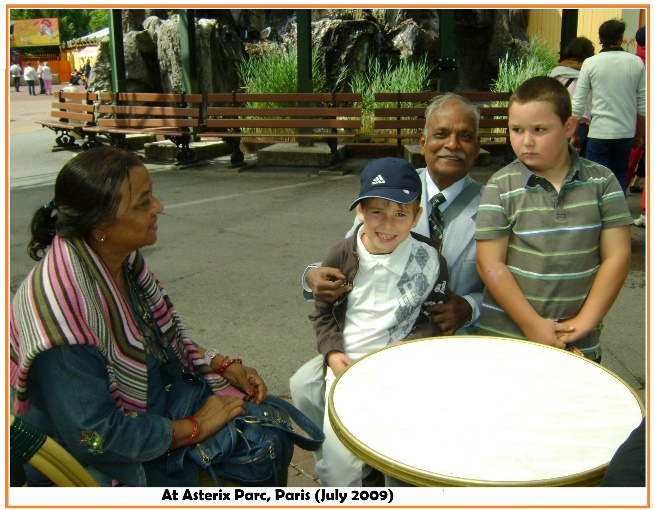
This family amusement park generally caters to the taste of the children
‘Fragonard’ (the parfaumeur) – This place was home to perfumery collection, retracing thousand years of history. Fragonard operates multiple factories & museums at Grasse and Eze. The pervasive fragrance of the perfumes and soaps displayed conjured up tender feelings and emotions.
Bateaux Mouches (Excursion boats)-Sailing under old & beautiful bridges and along Seine’s spectacular banks was a fantastic way to admire the city’s iconic landmarks including Eiffel Tower, Notre-Dame cathedral, Louvre and Jardin des Tuileries from a unique perspective. Bouquinisters (booksellers) are a unique part of the city's cultural landscape, selling used and antiquarian books, vintage postcards, and other collectables from their green boxes that line the river banks.
‘Lido’ on the Champ Elysses.- It was the show of dance and music in extraordinary sets , extravagant costumes and garish embellishments with appropriate light and sound effect. There are two shows every day. Indian dinner was served to us in the midst of the show. A binocular was provided to us for a better appreciation of the show. During show a photographer turned up and took photographs of the spectators in single, pair or group. He clarified that there was no compulsion in purchasing the prints. When the show was about to be over he again showed up with the prints. The quality was upto the mark and the charge moderate. We had no hesitation in paying for them. After the show was over we were taken to illumination tour past spectacularly lit landmarks of Paris specially the Eiffel tower. The next day after checking out from the hotel we visited the Montparnasse tower. Called the ‘Roof of Paris’ it is about 200 metres high. A high speed lift (the fastest in Europe) took only 40 seconds to ascend this height. Using the viewpoint indicators one can locate and see each of the districts and their monuments. The city is spread before the viewer.
Chamonix Mt Blanc– Journey by road to Chamonix Mt Blanc (620 kms from Paris) in southern France was a good 6 hours ordeal with 3 halts enroute. Since the coach had no toilet facility and since there could be no unscheduled stoppage ,we were cautioned by the manager before start of the journey to be prepared for such a situation. The respites at the halts were refreshing. There was a price for using the toilet facility. But it was free for the children. The check was ensured by provision of low height doors thereon. The food stalls exuded characteristic aroma of coffee brew which the French are so fond of. The automatic vending machines required use of coins. We had an assortment of coins viz pounds/pence/euro/cents. Finding difficulty in dealing with them we used to place the entire lot before the counter clerk who honestly picked up only the required amount. At one stoppage there was an automatic vending machine filled with sweet balls. On inserting the coin one ball following a circuitous path dropped on the tray. As I intended to lift it a child outwitted me and grabbed it. I attempted again with a fresh coin. This time his sister readied herself for similar trick. But this was noticed by their father who came to me apologizing and offered to pay more than the value of the sweet taken by his child. Reached the resort town of Chamonix Mt Blanc in the evening hours. Checked in the ‘Alpina’ hotel where we were served Indian dinner. Vouchers were available were to those interested in drink in the nearby casino. We woke up to the spectacular delight of the glaciers around us.
Chamonix is a renowned resort town at the junction of France, Switzerland and Italy. The place is home to Mt Blanc ( highest mountain in Western Europe) of the French Alps and offers tantalizing mix of alpine charm, affirming adventure and stunning mountain scenery. Snow-clad peaks soar into the bright blue sky.

A Rack and pinion metre gauge train from Chamonix ,traversing steep grades of 11 % to 22 %, takes one to Montenvers for a breathtaking panorama of the Mer de Glace (translates to ‘sea of ice’) which is the largest glacier in France. The Aiguille-du-Midi (translates literally to ‘Needle of the mid-day’) is the highest mountain peak in the Mont Blanc massif. A cable car takes the visitors from Chamonix to high mountains offering a dramatic view of the French, & Italian Alps and Mont Blanc. Before setting off the
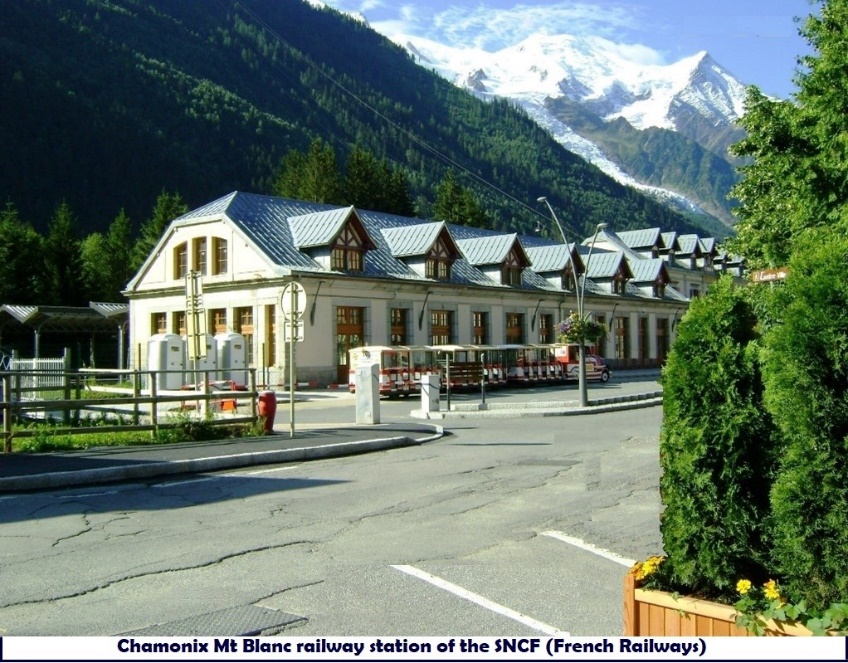 receptionist provided us with a map of the town marking the location of the Banque Laydernier for exchange of currency. The town has a vibrant atmosphere with elegant architecture, a car-free centre and a wide range of shops, restaurant and bars.
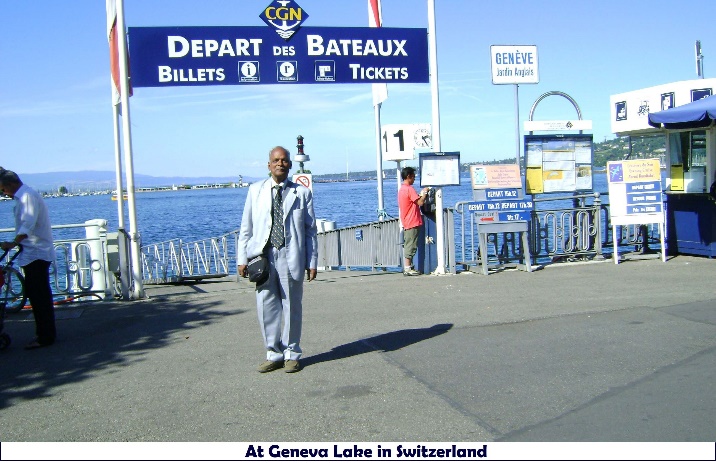
Geneva (Switzerland)- We departed in the afternoon for Switzerland which is a small Alpine country famous and known for its natural sceneries, heritage railway, watches & clocks, optical lenses, cheese and Chocolates. It is a famous holiday and travel destination for Indians. Lake Geneva stretched on the north of the Alps, is the largest fresh water lake of Western Europe straddling the border between Switzerland and France. The crescent shaped lake measures some 72 kms in length and 8 kms in width. The beauty of its shores and the sites of many historic estates ,elegant villas & rural setting near its banks has long been celebrated. The scenic shore cities include Lausanne, Geneva, Montreux on the Swiss side. The contemporary city of Geneva is , above all, a service metropolis retaining its financial importance and housing the headquarters of many International Organizations viz Red Cross, ILO, WIPO, UNCTAD, WTO, ICRC, WHO. The top attractions include International museum of Red cross, Palais des Nations and Scientific wonders of CERN (European Organization for Nuclear Research). At one place an enormous chair was resting on 3 legs only. The fourth leg was damaged and dangling in the air, signifying injury sustained by unsuspecting civilians due to landmines used in the war. The emblem of Geneva city is ‘Jet d’Eau’ (water jet) –the tallest fountain in the Europe.
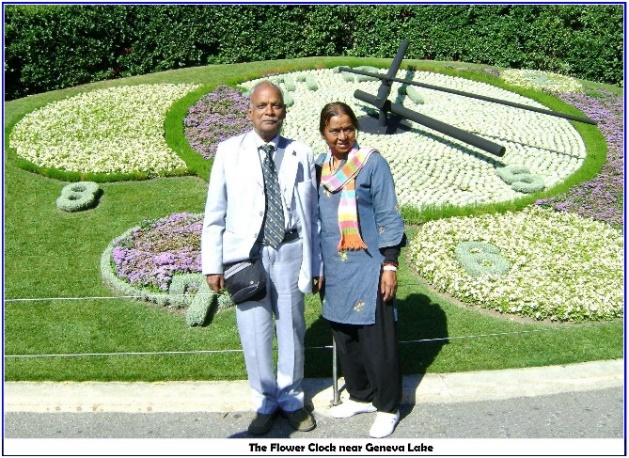
In a city famed for its timepieces the gorgeous Floral Clock in the ‘Jardin Anglais’ (English Garden) ,located on the lake shore, is kept blooming year around. Since the theme and flora are fashioned on seasonal flowers they undergo changes every now and then. Interestingly the sublime working clock wears different demeanour in different parts of the year. The city lies in the French speaking region of the country.
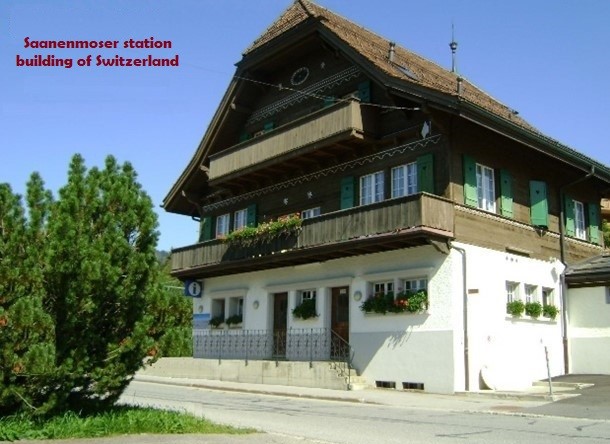
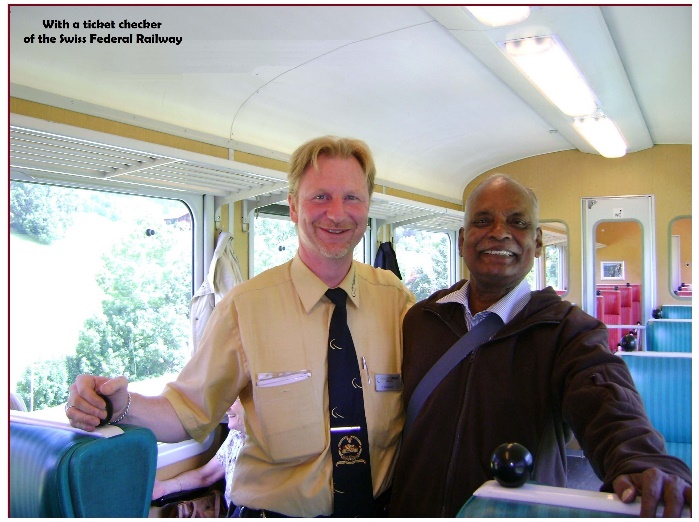
Saanenmoser (Switzerland)- It was at our next destination. Passing through the town of Gstaad we travelled for another 16 kms before arriving at the hotel Z Loft near Saanenmoser railway station . It was about 9 p.m. with daylight still available. Saanenmoser is a charming chalet village characterized by wooden dwellings with a sloping roof and widely overhanging eaves, common in Switzerland & other Alpine regions. On the first day we set forth in a Swiss Federal railway train for our journey from Saanenmoser to Gstaad. Saanenmoser station is situated on the railway line from Montreux (near Geneva lake) to Zweisimmen. .The station building resembles a modest Swiss cottage. The train fare to Gstaad per person (return) was Franc 9.60. During the train journey to Gstaad, on request, the ticket checker posed for a photograph with me.
The Golden Pass services (seen in the image below) connect Interlaken with Montreaux (via Gstaad) offering incredible views of the breathtaking panorama.

Gstaad, located in the German speaking section of Switzerland is the skiing capital of Europe and served by a number of ski lifts. The car-free town has luxurious hotels (including the prominent Gstaad palace) and offers excellent shopping centres.
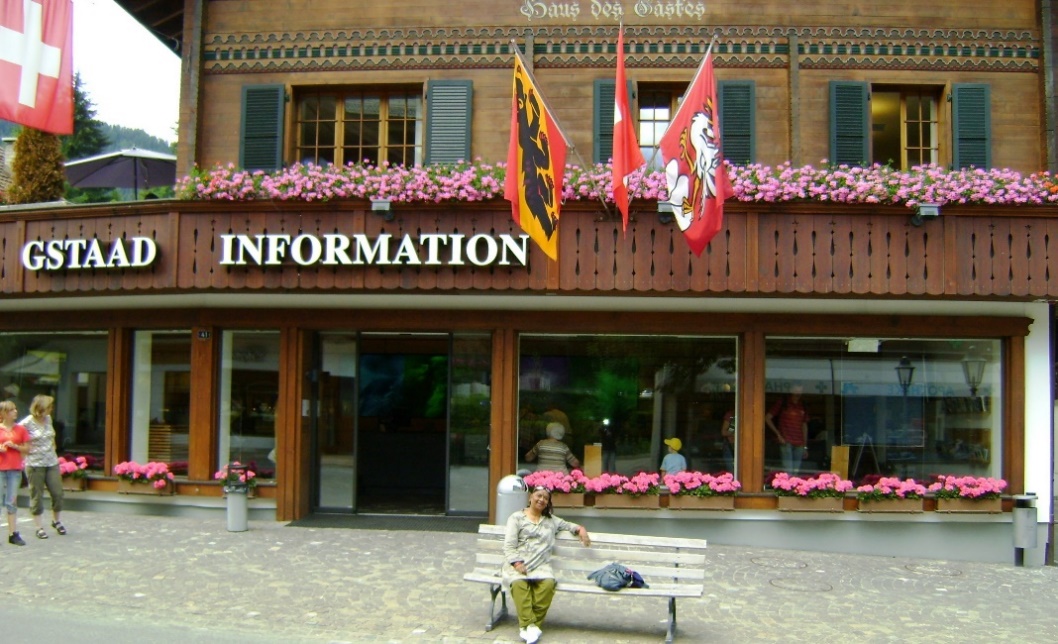 The houses and shops are bedecked with colourful flowers and Swiss flags are displayed on the streets. On return to Saanenmoser in the evening , I requested the counter clerk (a lady) from whom we had purchased ticket in the outward trip to help us by ringing the hotel to arrange a conveyance . Although the hotel was barely 800m , the ascent was steep. On being informed the hotel receptionist herself arrived with the hotel car. There was no charge for it. Next morning there was a wakeup call at 06.30 a.m. At the breakfast table there was a notice which read ‘one fruit per person. No takeaway.’ It was day for a trip from Saanenmoser to the capital city of Bern.
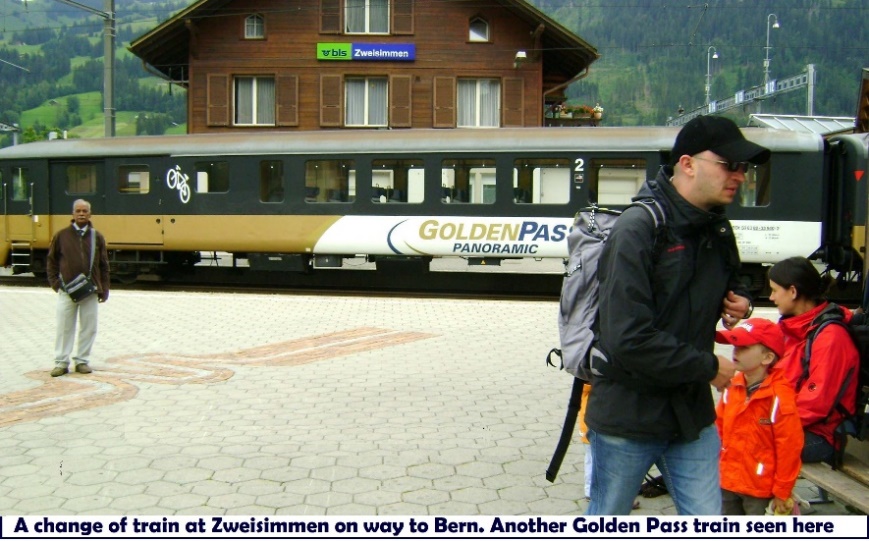 The train journey included change of train first at Zweisimmen and again at Spiez involving 3 hours of our time. The idyllic pastoral surrounding, the mountain trails thick with umbrageous trees, the lakes ,the cows and the Alpine Swiss cottages compelled our attention. It is from Spiez station that a line goes to heritage railway stations of Luzern, Interlaken and Jungfraujoch, nestled high in Alps. The return fare per person was Swiss Francs 70. Bern railway station is managed by the Swiss Federal Railway (SBB). The station building was modest with glazed face. The front and a portion of sides were occupied by the shops selling goods at cheaper rates compared to street shops. The entry to the platforms was through subways and escalators

 No hawker or coolie were to be seen the station premises. The city of Bern looked attractive with its broad streets, orderly crowd and the buildings with pleasing architectural appearance. The trams and the buses were graceful in different colour schemes. Both German and French are spoken here . The return journey to Saanenmoser was not without problems. Finding the designated platform at Bern, changeover of trains at two places and varying design of train doors for opening gave anxious moments. But the people were courteous and helpful. We arrived Saanenmoser station at dusk. This time also the receptionist ,on being informed of our arrival, obliged us by reporting at the station with her car. A notice posted on the door of our hotel room read:- ‘Charge per day. Swiss Franc 175 (in summer months) and Charge per day Swiss Francs 200 (in winter months)’. The landscape around the hotel was picturesque
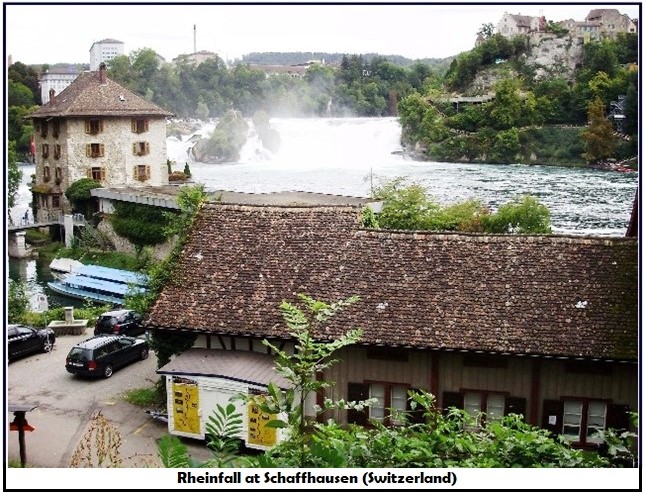
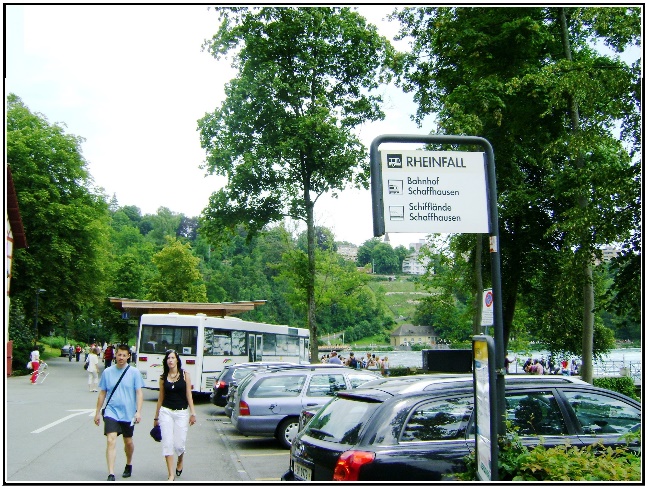
Schaffhausen (Switzerland) –From Saanenmoser we proceeded to this city in the northern Switzerland as a finger of this country surrounded on 3 sides by Germany. The railway station lies on the line connecting Sttuttgart with Zurich and Bern. Here the Rhine thunders over the Rhinefall –Europe’s largest one. There is a cruise to the foot of the fall.
Drubba Germany)- After leaving Schaffhausen the coach stopped at the border for a
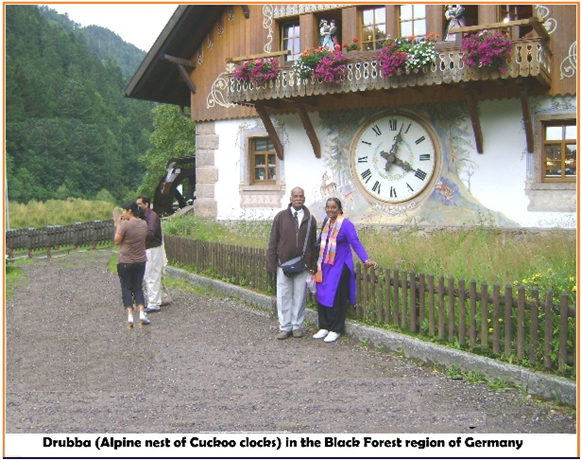 few minutes for payment of road taxes and resumed its onward journey through the wooded Black Forest region of Germany. It derives its name from the dense growth of Fir, Spruce and dark coloured Pine trees. We arrived Drubba, aptly called the Alpine nest of the Cuckoo clocks. It started as a shop selling souvenirs and offering boat trips on the lake Titisee. Now a wide selection of Cuckoo clocks and wall clocks are available here. At 4 p.m. there was an attractive show of the dolls dancing atop the clock tower amidst play of music.
Heidelberg (Germany)- The scenic drive continued upto this historic city situated 78 kms south of Frankfurt. The picturesque old place is situated in the valley of the river Neckar and is known for its dreamy and romantic setting around the old bridge and  has an imposing medieval gate on the old town side.
The city has one of the oldest universities viz Heidelberg university whose reputation blossomed during pre-World War I days by a number of notable physicians and humanists. Sanskrit is also taught in it. Heidelberg is one of the few German cities to be largely spared the destruction of World War II.
Heppenheim - We resumed the last lap of our journey to Heppenheim in the Rhineland. Walking through cobblestone streets and captivating colourful buildings of the town was to step back in time. The town has a history intertwined with World War II, particularly 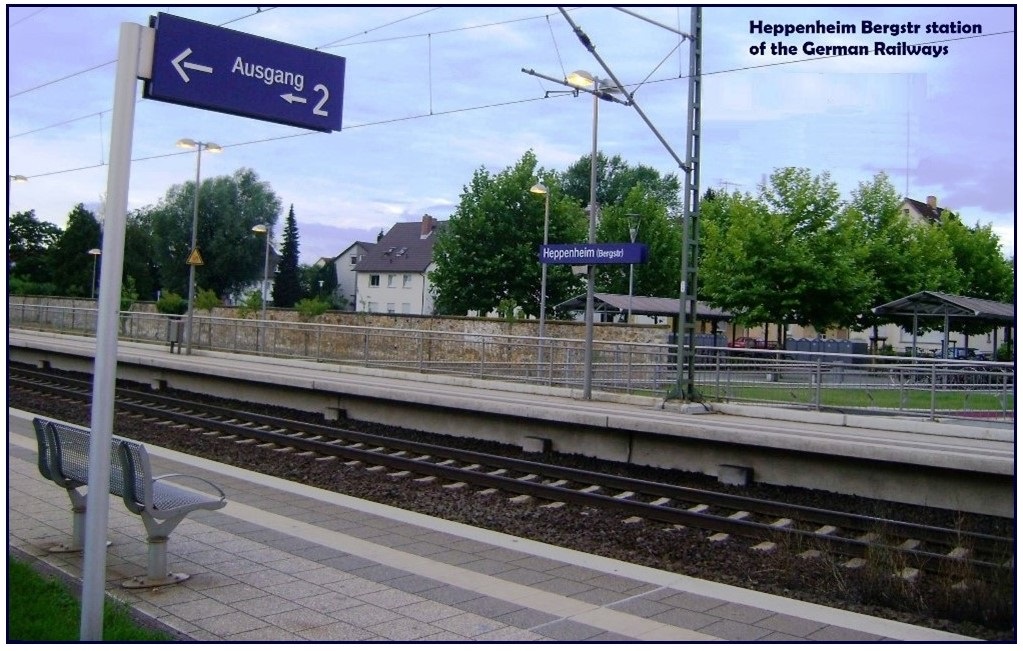 through its Jewish community and a subsidiary concentration camp.
We stayed at a hotel ‘Indian Palace’ (STARKENBURGER HOF) owned by a Gujrati. An Indian dinner was awaiting us. Dialogue with the hotel staff was in Hindi. Heppenheim station of the German railway (D.B) is situated opposite to the hotel. The next morning after finishing breakfast we set forth for Frankfort airport (60 kms away) for our return journey .
Every day of my European journey was a treasure trove of new experiences and unforgettable memories of the historic cities with majestic landmarks, startling architecture and vibrant culture, picturesque villages and stunning landscapes.